


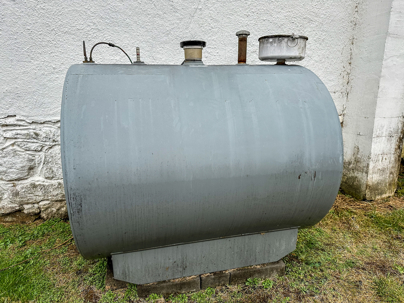
Switching your home away from an oil-fired heating system is exciting — think lower maintenance, a cleaner setup, and often better efficiency. But once the new system is in, one big question tends to linger: what happens to the old oil tank? Do you need to remove it, or can you simply leave it be? For over 95 years, Townsend Energy has helped New England homeowners navigate exactly this kind of transition, and we want to walk you through what Massachusetts and New Hampshire law actually require, plus what you can expect to pay.
Not sure what your old tank needs before you convert? Don't wait until it becomes a bigger (and pricier) problem — reach out through our online contact form or call (978) 717-0490 today.
Why You Can't Just "Leave It" Once It's Out of Service
An oil tank that's no longer connected to an active heating system doesn't just fade into the background of your basement or backyard. In both Massachusetts and New Hampshire, an out-of-service tank is generally treated as abandoned once it's been disconnected or unused for an extended period — and abandoned tanks come with legal obligations, not a free pass.
Here's why that matters:
- Old tanks are prone to rust, corrosion, and pinhole leaks, even after they've stopped being used.
- Leaks can contaminate soil and groundwater, triggering cleanup requirements under state environmental law.
- Homeowners can be held responsible for contamination cleanup costs, even if the leak happened gradually and unnoticed.
- Unaddressed tanks are frequently flagged during home sales, refinancing, or insurance inspections — creating headaches at the worst possible time.
Removal vs. Abandonment-in-Place: What's Actually Allowed
Homeowners often ask whether they can simply have a tank cleaned out and left in place rather than fully removed. The honest answer: removal is almost always the preferred and required path.
- Removal is the standard, most common outcome. A licensed contractor drains, cleans, and extracts the tank, then typically performs soil testing around the area to confirm there's no contamination.
- Abandonment-in-place (sometimes called decommissioning) is only allowed under narrow circumstances — generally when a tank is located beneath a structure, patio, or other feature where removal would cause significant damage. Even then, the tank must be drained, cleaned, and filled with an inert material like sand or foam, and the process still typically requires permits and inspection.
Local fire departments are usually involved in this process in both states, and permits are typically required before any tank leaves your property.
What Massachusetts Homeowners Should Know
Massachusetts regulates oil tanks through a mix of fire safety codes and environmental statutes, meaning there's rarely a shortcut around proper process. In general, homeowners should expect:
- A permit filed with the local fire department before removal begins
- An inspection of the tank and surrounding area
- Soil sampling for underground tanks, sent for lab testing
- Strict liability for any contamination discovered, regardless of how long the tank has been out of service
Tanks that have sat disconnected or unused for an extended period are commonly flagged as abandoned under state fire code, which is often the trigger that gets homeowners moving on removal in the first place.
What New Hampshire Homeowners Should Know
New Hampshire doesn't regulate residential underground tanks quite as heavily at the state level, but that doesn't mean it's a free-for-all:
- Many individual towns and municipalities have their own ordinances requiring permits or certified contractors.
- Lenders and insurance companies frequently have their own requirements around underground tanks, especially during a sale or refinance.
- The State's SafeTank Program may help income-qualified homeowners offset the cost of removing or replacing a substandard oil tank — worth checking into before you assume the cost is entirely on you.
What Does It Actually Cost?
Costs vary quite a bit based on tank type, location, and accessibility, but here's a general idea of what New England homeowners typically see:
- Aboveground tank removal: Usually the most affordable, often falling in a lower cost range due to easier access
- Basement tank removal: Costs depend heavily on how easily the tank can be maneuvered out of the space
- Underground tank removal: Generally the most involved and costly option, especially if excavation and soil testing are required
- Abandonment-in-place: Can sometimes cost more than straightforward removal once draining, cleaning, and fill materials are factored in
Additional costs to expect include remaining oil disposal and required soil testing, which is standard practice anytime a tank comes out of the ground.
Converting Systems? Here's Where to Start
If you're in the process of switching to propane, natural gas, or a heat pump system, your old oil tank shouldn't be an afterthought. Getting ahead of the removal or decommissioning process protects you from fines, cleanup liability, and unpleasant surprises down the road — especially if you plan to sell your home in the future.
With over 95 years of experience serving Massachusetts, New Hampshire, and Maine, Townsend Energy has guided countless homeowners through exactly this kind of transition, and we know how to navigate the permitting, inspection, and removal process the right way. If you're mid-conversion and wondering what to do with your old oil tank, don't leave it to guesswork — reach out through our online contact form or give us a call at (978) 717-0490, and we'll help you figure out the safest, most compliant path forward.